Red Garland
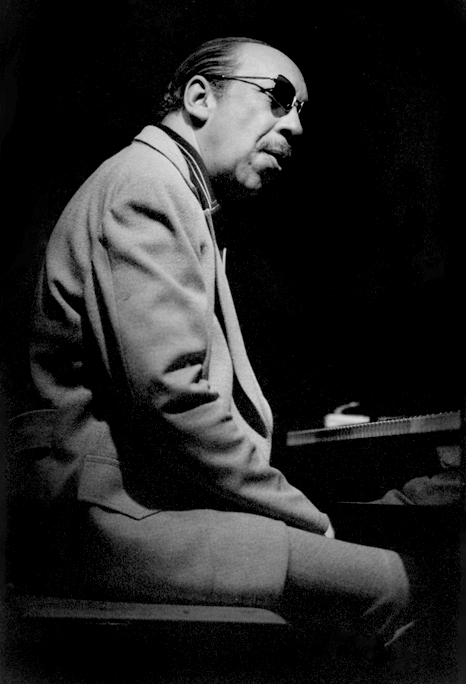
If you have ever heard a jazz pianist land a chorus of shimmering, two-fisted block chords and felt the room lift, you have heard the Red Garland effect. Among the fifty players in jazz journalist Gene Rizzo's ranking of the greatest jazz pianists, Garland lands at number 10 — a cheeky, hard-swinging bluesman who became one-third of the most famous rhythm section in modern jazz. Rizzo calls him, affectionately, "one of life's guilty pleasures for hordes of jazz fans."
This profile covers who Red Garland was, how a Texas boxer became Miles Davis's pianist, what made his touch so instantly recognizable, and the recordings — plus scores — to start with today.
The short answer: Red Garland (1923–1984) was a Dallas-born pianist whose sparkling block chords and swinging, upbeat left hand powered the classic Miles Davis Quintet, and who left a deep catalog of trio records prized for their bluesy charm.
Life and career
Garland was born in Dallas, Texas, in 1923. He dabbled in clarinet and alto saxophone as a teenager and trained as a boxer before the draft, coming to the piano late — around the age of twenty, while he was in the Army. The instrument took quickly. Discharged in 1944, he was soon holding his own alongside a group led by trumpeter "Hot Lips" Page, and in 1946 he joined Billy Eckstine's bebop-heavy big band.
His fame arrived with a long stint in the Miles Davis Quintet from 1955 to 1959. With bassist Paul Chambers and drummer Philly Joe Jones, Garland formed the acclaimed rhythm section heard across a run of celebrated Prestige recordings — a unit so admired that altoist Art Pepper borrowed it for Art Pepper Meets the Rhythm Section. After leaving Davis he recorded prolifically, occasionally with horns but mostly with trios. He returned to Dallas after his mother's death in 1965 and largely retired from the scene; by some accounts he did not even own a piano at the time of his death in 1984.
Style and influence
Garland's signature was a pairing of devices: bright, locked-hands block-chord voicings in the right hand, and a built-in left-hand accompaniment that chorded on the upbeats of two and four. Rather than pour out relentless streams of eighth notes like some of his bebop peers, he left space, leaned on the blues, and kept everything singing. Rizzo's verdict is that Garland "is pianistic even at his sassiest" — the swing never costs him elegance.
The roots show clearly: he drew the bebop line from Bud Powell and the light, riffing touch from Nat "King" Cole, and his celebrated arrangement of "Billy Boy" openly nods to Ahmad Jamal's use of space. Critics sometimes underrated him as a crowd-pleaser, but the pianists who came up behind him kept his block-chord approach in circulation for decades.
Essential recordings
Garland's discography is large, but a few sides capture exactly what made him a cult favorite:
| Recording | Label / year | Why it matters |
|---|---|---|
| A Garland of Red | Prestige, 1956 | His debut as a leader; the trio blueprint of block chords, blues feel and swing in one place |
| "Billy Boy" (on Miles Davis, Milestones) | Columbia, 1958 | His most celebrated trio feature — a textbook of the locked-hands block-chord style |
| Art Pepper Meets the Rhythm Section | Contemporary, 1957 | The Davis-era rhythm section on loan, showing how completely it drove a date |
| Red Alert | Galaxy, 1977 | A later, horn-flecked session that proves the swing never left him |
Play Red Garland's music
The best way to hear what Garland did is to play the tunes he made his own. Start with the melody of "Billy Boy" or "Bye Bye Blackbird," then try voicing the right-hand chords in locked-hands style over a walking bass — that is the Garland sound in miniature. A few of his signature vehicles are open on MuseScore below, in arrangements from approachable to advanced.
Where Red Garland ranks among jazz pianists
Rizzo places Garland tenth, in the company of hard-bop and soul-jazz stylists. See the full list in our guide to the best jazz pianists of all time, and compare him with the man whose space he borrowed, Ahmad Jamal, and with his ranking neighbors McCoy Tyner and Gene Harris. To understand the harmony under his block chords, our guide to jazz chord progressions is a good next step.
Frequently asked questions
What is Red Garland's block-chord style?
It is a "locked-hands" technique in which both hands strike a full chord in rhythm with the melody, so the tune moves in thick, ringing blocks rather than single notes. Garland brightened it with blues inflections and an upper-register sparkle that became his trademark.
Which Miles Davis records is Red Garland on?
Garland played in the Miles Davis Quintet from 1955 to 1959 and appears on classic Prestige and Columbia dates from that period, including Milestones (1958), where his trio feature on "Billy Boy" is a highlight.
What should I listen to first?
Start with "Billy Boy" for the block-chord showcase, then explore his debut trio album A Garland of Red (1956) to hear the full range of his bluesy, swinging style.